
Shunter Jobs in the UK: Pay, Training, Apply
Published Nov 9, 2026
Shunter jobs in the UK explained: railway, HGV yard and bus shunter pay, licences, shifts and how to apply with no experience.
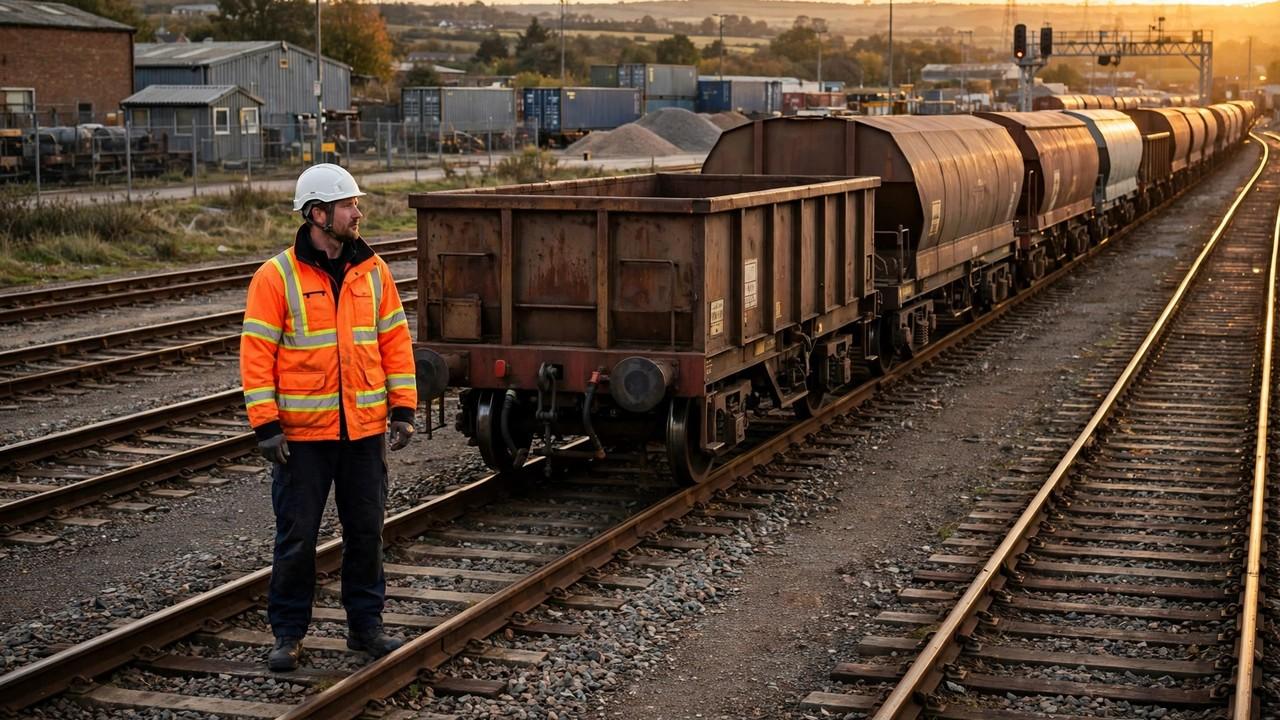
What is a shunter, and what do shunter jobs pay?
A shunter moves vehicles around a yard or depot instead of driving them on the open road. In the UK the word covers three jobs: railway shunter, HGV yard shunter and depot or bus shunter. Pay runs from about £24,000 for depot work to around £37,500 for HGV night shifts, and most roles need a licence or operator training first.
A shunter is a worker who moves trains, lorries or buses around a yard, siding or depot so the right vehicle is in the right place at the right time. That one sentence hides three very different working days, three different licences and three different pay packets, and most job adverts do not say which one they mean. Railway shunting means coupling wagons in a freight yard. HGV yard shunting means moving trailers around a distribution depot, usually at night. Depot or bus shunting means moving buses around a bus depot and getting them ready for the morning. Same word, different job, and no ranking page explains the three side by side. That is what this guide does.
PakkiNaukri is a free job board and CV builder for job seekers in Pakistan and for visa-sponsorship jobs in the UK, USA, Europe, the Gulf, Australia and New Zealand.
One plain fact before we go further. Shunter roles are generally not eligible for the UK Skilled Worker visa, because they sit below the degree-level skill threshold the visa rules use. So this guide is written for people who are already in the UK, or who already have the right to work there.
If you are already in the UK and looking, start with the live UK jobs on the jobs board and narrow it down on the browse UK jobs by city and category page, where you can filter by the town you can actually get to. A shunter job is local: you cannot do it from home. Semrush recorded 480 searches a month for "shunter jobs" in the UK in November 2026, a small, steady market, not a gold rush.
What does a railway shunter do all day?
A railway shunter works in a yard or siding, moving wagons and coaches so trains can be built, split, stored or sent for maintenance. The work is physical, outdoors and ruled by safety procedure from the first minute to the last. It suits people who like working outdoors and doing safety-critical work properly.
A normal shift starts with a briefing. The shunter, the signaller and the driver agree the plan: which wagons move, in what order, and on which road. Then the shunter is out on the ground, walking beside moving wagons, coupling and uncoupling them, checking brakes and connections, and giving hand signals or radio instructions to the driver. Coupling means joining heavy wagons with a screw coupling or a buckeye, standing between vehicles that weigh tens of tonnes, and the margin for error is small. That is why the job is safety-critical, and why operators train you themselves. You also log wagon numbers, check loads are secure, report defects, and hand over a clear record to the next shift. A yard that loses track of a wagon loses money.
Entry is through the train operator or freight company, not through a driving school. Most railway shunters are trained by the operator, and many start in a nearby role and move across. The National Careers Service train driver profile, the closest official guide to rail entry, describes the same shape of route: an apprenticeship lasting one to two years, or a direct application, or working up from a platform or conductor role, with GCSEs in English and maths, assessments and a medical, a minimum age of 18, and living within 45 to 60 minutes of the depot. That profile is for train drivers, not shunters. Pay for railway shunting is rarely advertised openly. Operators tend to discuss it at application stage, and the figure moves with the operator, the location and the night and weekend allowances.
What does an HGV yard shunter do all day?
An HGV yard shunter moves trailers around a distribution depot. The lorries come in from the road, the trailers need to be parked, swapped, loaded or lined up for the next departure, and somebody has to move them safely in a tight yard full of other vehicles, forklifts and people on foot. That somebody is the shunter.
The vehicle is usually a tractor unit, the same kind that pulls a trailer on the motorway, or a small yard tug, a Terberg or similar, built for short, sharp moves rather than long distances. You will be reversing a 13.6-metre trailer into a bay with inches to spare, over and over, sometimes forty or fifty times a shift. A typical night starts with a handover: which trailers are in, which are loaded, which need to go to which bay, and which drivers are due out first. Then you work through the list.
The work is mostly driving, but it is not only driving. You check the trailer before you move it: lights, tyres, brakes, doors shut and locked, load secure. You report damage the moment you see it, because a damaged trailer that goes out on the road becomes everybody's problem.
Nights are common, and that is where the money is. Most HGV shunter adverts are for night shifts, often on a 4-on-4-off pattern, and the pay reflects that. Days pay less, nights pay more, and an advert that only quotes the night rate is just showing you the best number. The exact figures are in the pay section below.
Your CV for this kind of role should read like a driving record, not a life story. Licence class first, then the vehicles you have actually moved, then the depots or employers. The driver CV template for Saudi Arabia is written for a different country, but its structure is the right one for any driving CV: licence, vehicles, routes, employers, in that order. Build yours with the free CV builder, and keep it to the facts a depot manager can check in thirty seconds.
What does a depot or bus shunter do all day?
A depot or bus shunter moves buses and coaches around a bus depot, and the job sits somewhere between driving and caretaking. The buses come back in the evening, they need to be parked in the right order for the morning, fuelled, cleaned, checked and sometimes moved to the workshop. In the morning, the shunter gets the right bus to the right bay so the driver can take it out on time. It is quieter work than HGV shunting, and the vehicles are smaller, but the pressure is real: a bus in the wrong bay at 5 in the morning delays a service full of passengers.
The day often starts before dawn or ends after midnight. You take the keys, check the board that says which bus goes where, and you start moving them. Each bus needs a walk-round check before it moves: lights, tyres, mirrors, doors, and any damage from the day before. You report anything you find, because a bus with a cracked mirror or a warning light should not go out on a route. Parking is the skill that separates a good bus shunter from a slow one. Depots are packed tight, the gaps are small, and the buses are long. New starters are slow, and that is normal.
The licence question is simpler here than for HGV work, and the licence section below covers it in full. Moving buses on private depot land can often be done under a site authorisation, while driving a bus on a public road needs the full bus licence and Driver CPC. People skills matter here too. You work alongside drivers, cleaners, engineers and controllers, and a shunter who communicates and flags problems early is worth more than one who is fast but silent. The depot floor is often the way into a driving role. Our UK CV format guide walks through the short, clean layout that works best for a UK depot CV.
How much do shunter jobs pay in the UK?
Pay is the question everybody asks first, and it is also the question where adverts mislead most easily, so let us go slowly and name the source for every figure. There is no single shunter salary: three jobs, two shift patterns, and a gap between agency and direct work.
Recruiter salary guides put a depot shunter at about £24,000 to £28,000 a year at entry, about £27,000 to £32,000 with experience, and about £30,000 to £36,000 in a senior or lead role. The same recruiter guides put a bus shunter in almost the same bands: about £24,000 to £28,000 at entry, about £27,000 to £33,000 with experience, and about £30,000 to £36,000 in a senior or lead role. Those figures come from the Venatu Automotive salary guides seen in November 2026, and they are guides, not promises. Your depot, town and shift pattern will move the number.
Now the HGV side, where live adverts give us exact numbers. Job adverts listed in November 2026 show a Culina Group HGV Class 1 shunter role in Workington at £35,294 a year. The same employer's Daventry site advertised £37,500 a year for nights and £36,000 a year for days, on a 4-on-4-off pattern. A Stobart Daventry advert listed £37,472 a year. The pattern is clear: HGV shunting pays more than depot shunting, nights pay more than days, and the day-night gap at one depot can be £1,500 a year.
That gap is the first trap in shunter adverts. An advert that shouts £37,500 is usually a night-shift rate. If you want days, or you cannot work nights for family reasons, your pay is the lower number, and you should judge the job on that. Agency work is the other thing to understand. Many depots hire through an agency first, and the hourly rate can look higher, but agency work can also mean no sick pay, no holiday pay in the same way, and a rota that changes weekly. A direct job with a slightly lower headline rate and proper holiday, pension and a fixed rota is often worth more over a year. In plain money: depot and bus shunting is a steady, modest wage with a route into bus driving, and HGV shunting is the best-paid of the three. If an advert promises far more than these bands, or asks you to pay for training before you start, stop and check it. Our guide on how to apply for jobs online, step by step takes you through finding the real advert, and the job interview checklist covers what catches people out.
Which licence do you need for each type of shunter job?
The licence question is different for each of the three jobs, and getting it wrong means applying for work you cannot legally do. Read it against the type you have chosen.
For HGV yard shunting, the rule turns on where the vehicle moves. If you drive a lorry or a trailer on a public road, you need a C+E licence, which is the Class 1 licence, and a Driver Certificate of Professional Competence, known as Driver CPC. If you only move trailers on private depot land, the depot can authorise you under its own site rules, and a lower licence may be enough. That is why some HGV shunter adverts ask for a full Class 1 licence and others say training is given.
GOV.UK sets out the route clearly on its page about how to become an HGV or bus driver: you need a full car licence first, then the Driver CPC, which involves five tests and 35 hours of training every five years, with the licence renewed every five years, and yearly from age 65. That is the official route, and it is the only source you should trust for the rules.
A Class 1 licence is not cheap, and the total cost of training and tests runs into thousands of pounds. Do not pay it on the basis of one advert. Talk to depots first. Some employers fund the licence for the right person, some hire you for depot-only work and train you up over time, and some expect you to arrive with it. But the licence alone does not get you the job. Penalty points are the quiet killer of HGV applications. A licence with points on it, especially for speeding or a mobile phone, can end an application before it starts, because the employer's insurer sets the rules. If you have points, be honest about them early, before you spend money on training.
For railway shunting, there is no driving licence to buy. The operator trains you in the yard rules, coupling, signalling and safety procedure. What the operator checks instead is your health and your reliability: a medical, including eyesight and hearing, and a record of turning up and following procedure. For depot and bus shunting, the licence depends on the depot. Moving a bus on private depot land can run on a site authorisation with a car licence. Driving a bus on a public road needs the full bus licence and Driver CPC. So ask any bus depot one simple question: does this role stay on depot land, or does it involve public-road driving? Never drive on a public road without the licence that covers it. Site authorisation covers private land only.
How do you get a shunter job with no experience?
The realistic entry point is depot or bus shunting. It asks the least of you on day one: a car licence, a clean record and the ability to work shifts. Many depots train new starters on site. If you can drive a car safely, follow instructions exactly, and turn up on time every time, you can do this job.
HGV yard shunting is the second step, not the first. Without a Class 1 licence you can still get into a depot, doing depot-only moves under site authorisation or working in the warehouse first and moving across. The smarter route is to get a foot in the door at a depot that runs HGV shunting, prove yourself for a few months, and then ask about licence training. Railway shunting is the hardest to enter with no experience, because the operator trains you and the training is expensive. The realistic route is a trainee role with the operator, or a station or platform role first. The National Careers Service train driver profile is the closest official guide to that route, setting out the apprenticeship, the GCSEs, the medical and the age and location conditions rail employers use. It is a train driver profile, not a shunter profile.
Now a worked example. Take a 24-year-old in Birmingham with only a car licence, no depot experience, and rent to pay.
Option one, the fastest: apply for a depot or bus shunter role at a Birmingham bus depot. He needs no new licence. At, say, £25,000 a year, that is his year one. In year two, a senior shunter role or driver training can move his pay towards £30,000. Total new cost to him: almost nothing beyond a decent pair of boots.
Option two, the best-paid in the end: get into an HGV depot first, in a warehouse or yard role, and work towards a Class 1 licence. The licence and tests cost thousands of pounds, so he should not pay for them before he has a depot job or an employer willing to help. If he does get the licence and moves into HGV night shunting, the adverts listed in November 2026 show roles at £35,294 to £37,500 a year. That is a real jump from £25,000, but it takes time, money and a clean licence.
Option three, the slowest: apply for railway trainee roles with freight operators. He may wait months for a vacancy, and he may need to start in a station role first. The payoff is a railway career, not a quick wage.
My own view, as someone who has watched depots hire for years, is this: take option one now, and keep option two open. A paying depot job this month beats a licence you cannot afford and a railway application that may take a year. Get inside a depot, learn the work, keep your licence clean, and let the next step come from inside the industry.
What are the shifts really like, and how do you apply?
Shunter shifts are not office hours, and anybody who tells you otherwise is selling you something. The work follows the vehicles, and the vehicles move at night, early in the morning and at weekends. Know the pattern before you apply, or the job will wear you down in a month.
The most common pattern in HGV shunting is 4-on-4-off: four shifts on, four days off, repeating. Four shifts in a row sounds hard, and it is, but four days off in a row is the payoff, and many drivers plan their whole life around it. The shifts themselves are usually nights, often 10 or 12 hours. Depot and bus shunting usually runs on an early-late split: the early shift starts before dawn, getting buses out for the morning peak, and the late shift brings them back in. Weekend work is common. Railway shunting follows the freight timetable, which means nights, weekends and early starts, with rest days that move around the week.
Applying is simpler than people make it. Find the real advert, from the employer or the depot, not from a copied listing on a site you have never heard of. Read the shift pattern and the licence requirement first, before the salary. Then shape your CV for that one role: licence or training at the top, relevant experience next, and a short line about the shifts you can work. At the interview, expect practical questions, not clever ones. They will ask about your licence, your points, your shift availability and your experience with the vehicles. The right answer is always the safe one: stop, check, report it, do not force it. Keep your documents ready before you apply: licence, CPC card if you have one, proof of right to work, and two references who will actually answer the phone. A slow reference is the most common reason a good candidate loses a start date.
Your next step: start with the UK jobs near you
You know the three jobs, the pay, the licence and the entry route. The next step is practical, and it starts with the jobs open near you right now.
Open the UK jobs by city and category page and filter it to your town and to driving or depot work. Look at the shift pattern and the licence requirement before you look at the salary, and shortlist two or three adverts that fit the life you actually live. Then build a CV that answers the depot manager's two questions in the first ten seconds, licence and hours, using the free CV builder tool if your current CV is out of date. Apply this week, while the roles are still open. Depot jobs move fast, so apply with a clean CV and your documents ready.
We follow the same pattern — real employers, real pay and real application steps — in our guide to nursing jobs on the Isle of Wight.
Frequently asked questions
Do I need a Class 1 licence to be a shunter?
Not always. HGV shunting on public roads needs a C+E, Class 1, licence and Driver CPC, but moving trailers on private depot land can run on a site authorisation. Depot and bus shunting often needs only a car licence to start.
How much do shunter jobs pay in the UK?
Depot and bus shunters typically earn about £24,000 to £28,000 at entry, rising to about £30,000 to £36,000 in senior roles. HGV shunter adverts listed in November 2026 show £35,294 to £37,500 a year, with nights paying more than days.
Can I get a shunter job with no experience?
Yes, and depot or bus shunting is the realistic starting point. Many depots train new starters on site and ask only for a car licence, a clean record and shift availability. HGV and railway shunting usually need a licence or operator training first.
Are shunter jobs eligible for a UK Skilled Worker visa?
Generally no. Shunter roles sit below the degree-level skill threshold the Skilled Worker visa uses, so they are not normally sponsored. This guide is for people already in the UK or already holding the right to work there, and it makes no promise of sponsorship.
What shifts do shunters work?
Mostly nights, early mornings and weekends. HGV shunting commonly runs on a 4-on-4-off night pattern, while bus and depot shunting usually splits into early and late shifts around the morning and evening peaks. Always check the rota in the advert before you apply.
Put it to work on real, checked jobs.
Every job on PakkiNaukri is taken from a company’s own careers page and re-checked daily, and a free account scores each one against your CV. Start with today’s list.